
Model the topology
Fix feeder, distribution and drop segments, then decide where splitters sit and what ratio the budget allows.
A repeatable workflow reduces incompatible passive components, hidden bend losses and incomplete commissioning records.
Record the OLT position, node count, split ratio, route distance, cable type, bend radius, box or cabinet capacity and expected service life before choosing a passive component.
The checklist can be applied to metro access, residential districts, multi-dwelling units, central offices, duct routes and rural spans.
Fix feeder, distribution and drop segments, then decide where splitters sit and what ratio the budget allows.
Add specified splitter loss, connector loss and splice loss, then compare with the OLT and ONT operating window.
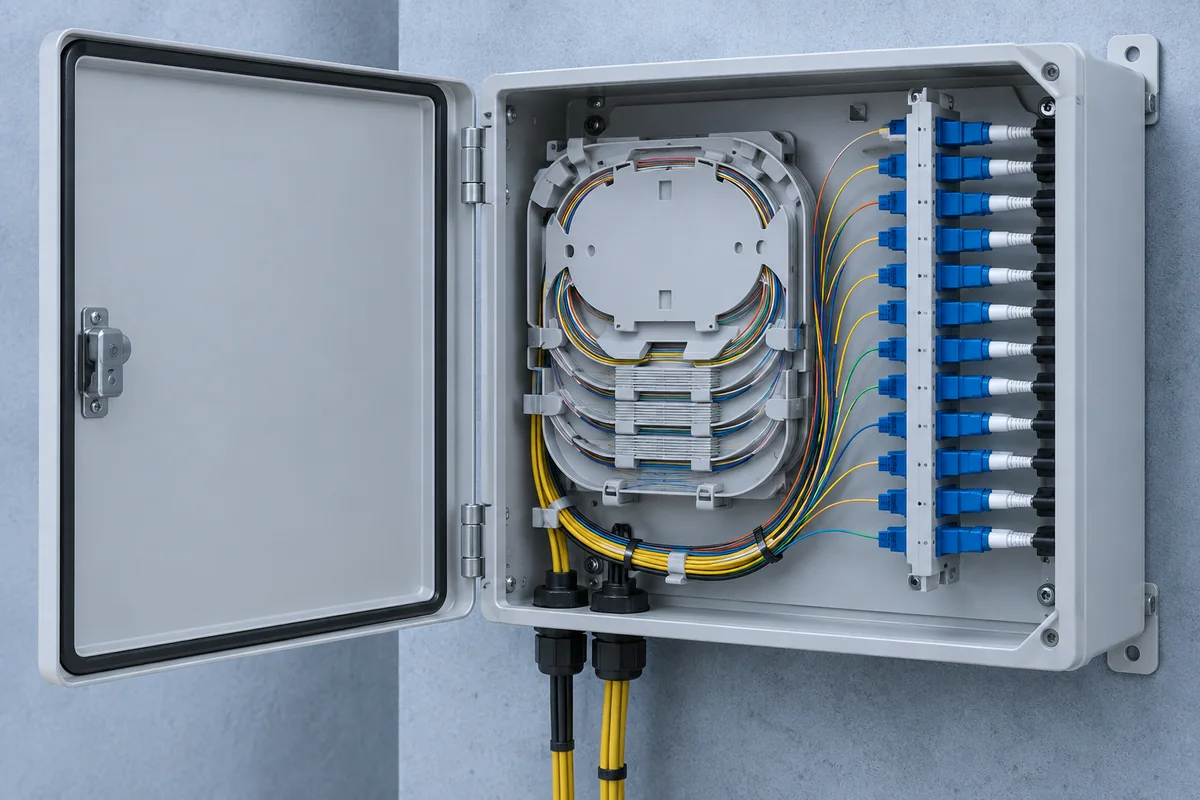
Pull and splice cable, close every joint closure against water and dust, and dress slack above the rated bend radius.
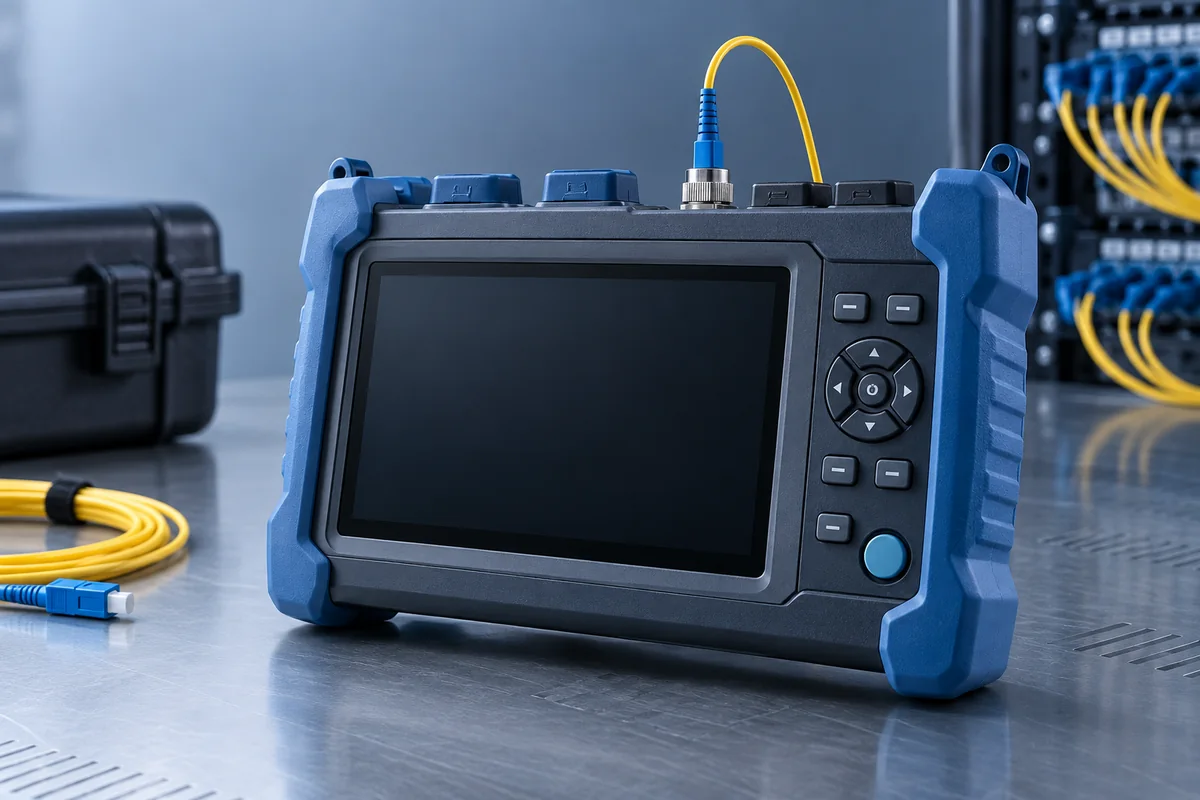
Use power/loss testing for link acceptance and OTDR where event location or route evidence is required.
No single reading describes every aspect of an ODN passive path.
Checks contamination and fiber end-face damage before splicing or mating.
Measures end-to-end insertion loss at the selected wavelength.
Estimates event location, splice loss, splitter loss, reflectance and distributed attenuation along a route.
Confirms port mapping before equipment is connected, especially for splitter-based ODN nodes.
Commissioning records should connect each measurement to the node identifier, split ratio, endpoints, wavelength, reference method, equipment and date.
A concise technical brief makes component and testing discussions more useful.