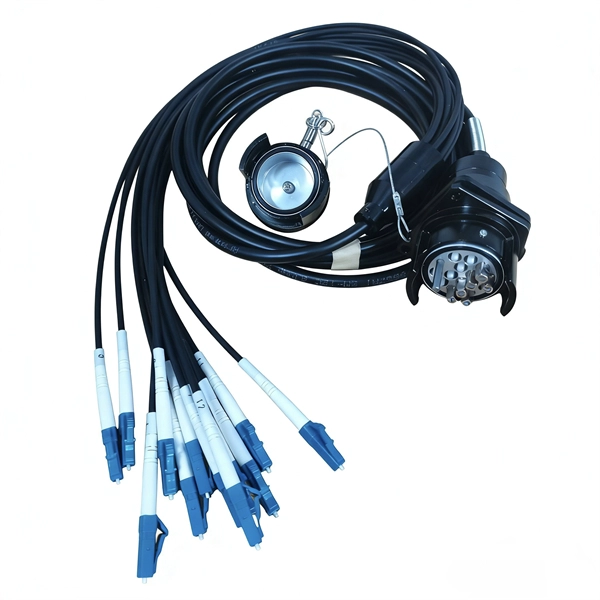
Wires in a distribution box are numbered and sorted using sequential, functional, and component-based systems to ensure clear identification, traceability, and safe maintenance.Wire Numbering Principles
Sequential Numbering: Wires are often numbered in order, starting from 1 and increasing sequentially according to the wiring diagram or connection sequence. This helps trace the current flow from the incoming power line through the distribution box to the outgoing circuits . Function Grouping: Wires can be grouped by function, such as motor starting circuits (100–199) or motor protection circuits (200–299). This allows quick identification of the functional module a wire belongs to . Component Identification + Pin Number: In complex cabinets, wire numbers may include the component abbreviation and pin number. For example, KM1-3 indicates the wire connected to the third pin of contactor KM1 . Location + Function Identification: Wire numbers can also include spatial and functional information, e.g., L-S1-M represents a wire on the left side (L), related to the start function (S1), connected to a motor (M), .
Main vs. Control Circuit Numbering
Main Circuit (Primary Circuit): Carries high current and is numbered using a combination of component number, phase sequence, and serial number to facilitate tracing power flow . Control Circuit (Secondary Circuit): Handles low-current signals for buttons, relays, and meters. Numbering is based on functional partitions, often using a prefix and serial number to simplify fault location . Example: For a three-phase motor start-stop control:
- Power supply from L1: wire 1
- Stop button SB1 outgoing: wire 2
- Start button SB2 + KM1 auxiliary contact: wire 3
- KM1 coil incoming: wire 4
- Thermal relay FR1 outgoing: wire 5 connected to L2 .
Sorting and Labeling
Terminal Block Identification: Wires are labeled at both ends, near terminal blocks, using tags, printed labels, or metal nameplates . Schematic Reference: Each wire number corresponds to the wiring diagram, showing start, end, and components passed through, ensuring accurate tracing and troubleshooting . Standardized Equipment Numbering: Distribution panels and MCCs are assigned unique electrical identification numbers, which are used as prefixes for circuit references, ensuring consistency across schematics and physical labeling .
Best Practices
- Maintain unified numbering rules across the entire distribution system.
- Use clear, durable labels at both ends of each wire.
- Group wires logically by function, circuit, or component.
- Reference schematics to verify numbering and connections.
- Separate main and control circuits for clarity and safety. By following these principles, distribution box wiring becomes organized, traceable, and easier to maintain, reducing errors and improving safety during operation and troubleshooting .