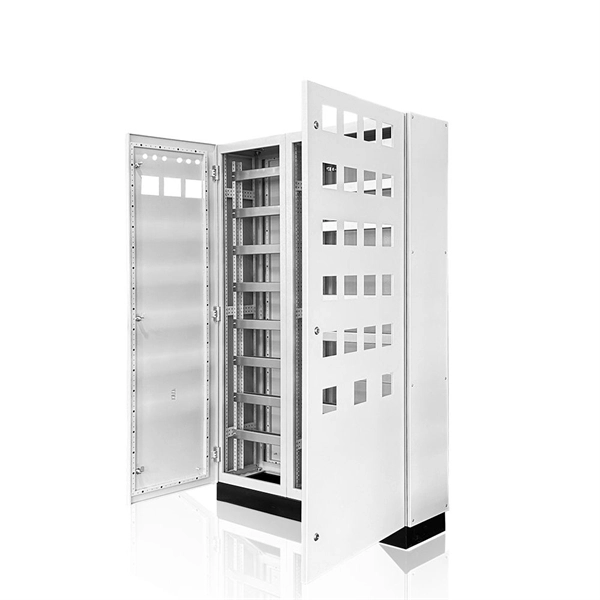
The number and placement of distribution boxes on municipal construction sites depend on load requirements, site layout, and safety regulations, with separate boxes for power and lighting circuits recommended.Key Guidelines for Distribution Boxes
1. Determining the Number of Boxes The number of distribution boxes is primarily determined by the load profile of the site, including simultaneous operation of machinery, lighting, and welfare facilities. High-power equipment such as tower cranes, batching plants, and hydraulic machines require dedicated three-phase 400 V connections, while single-phase 230 V circuits serve lighting and welfare facilities . Sub-distribution boxes are installed downstream of the main distribution board to ensure safe and efficient power delivery across different site zones . 2. Separation of Circuits Power and lighting circuits should be installed separately, either in different distribution boxes or clearly segregated within the same box. This reduces interference and enhances safety . Low-voltage circuits (110 V) for tools and site lighting should also be considered separately from high-power machinery. 3. Environmental Protection and Safety Distribution boxes must be rainproof and dustproof, typically with an IP55 or IP65 rating, to withstand harsh outdoor conditions . Earth leakage circuit breakers (RCDs/GFCIs) are recommended to protect personnel from electric shock . All wiring should be neatly arranged, firmly installed, and easy to operate, with proper grounding according to local electrical codes . 4. Placement and Accessibility
- Main distribution boxes are installed at a central, accessible location.
- Sub-distribution boxes are placed closer to high-demand equipment or site zones to minimize cable lengths and voltage drops .
- Boxes should be mounted at a safe height to prevent accidental damage and allow easy operation. 5. Compliance and Documentation All installations must comply with local electrical standards, such as BS 7671 in the UK, IEC 60309 for industrial plugs, and OSHA regulations for temporary wiring . Site-specific risk assessments and documentation of load calculations, protective devices, and grounding systems are essential for safety and regulatory compliance .
Summary
In practice, a municipal construction site will have one main distribution box connected to the public grid, with multiple sub-distribution boxes strategically placed according to equipment layout and load requirements. Each box should separate power and lighting circuits, provide environmental protection, include safety devices, and comply with relevant electrical standards to ensure safe and reliable temporary power distribution .